
It’s one of those cheeky thoughts every crunch lover has had at least once — “Could there be something edible right here, in my own garden?” The UK might not be the first place that comes to mind when you think of rich, earthy clays, but the ground beneath our wellies hides a surprising amount of geological variety.
Before you go scooping up a spoonful, though, there’s a very big caveat: not all soil is safe, and most certainly not all clay is edible. But if you’re curious about where edible-type clays could occur and how to identify them responsibly, this little field guide is for you.
1. Britain’s earthy geography in brief
Across the UK, the soil and clay landscape changes dramatically from region to region.
-
South East England: rich in chalk and marl clays — soft, pale and smooth, with high calcium carbonate content. (Think more “chalky crumble” than crunchy bite.)
-
Midlands and Northern England: home to heavier, iron-rich red clays, often used historically in pottery. These are dense and mineral-heavy — not something you’d want to crunch straight from the ground.
-
Scotland: glacial soils and peat-heavy earths dominate here. They’re rich, dark and spongy — fascinating for gardening, but far too organic for snacking.
-
Wales and Cornwall: slate-based and silty soils, often containing fine mineral sediments. Pretty to look at, but can hide metallic traces from old mining activity.
In short: Britain’s got plenty of clay, but most of it is workshop-worthy, not mouth-ready.
2. How to identify (and test) clay safely
If you’re still tempted to investigate what’s in your backyard, you’ll want to go about it the smart way. Here’s a cautious approach:
Step 1: Observe texture and colour
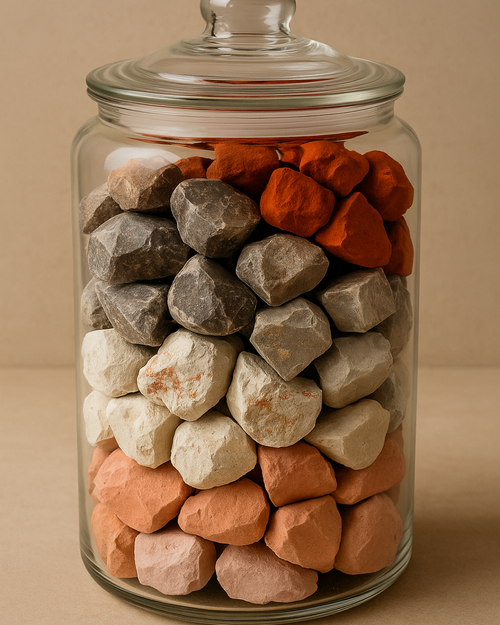
Clay-rich soil tends to feel smooth and sticky when wet, and holds shape well when moulded. Pale grey or off-white clays indicate high kaolin or chalk content, while reddish hues suggest iron oxides.
Step 2: Conduct a simple pH test
You can buy inexpensive soil test kits online. Edible-style clays typically sit around neutral (pH 6–8). Acidic or highly alkaline samples should be avoided — they’re often linked with heavy mineral or industrial deposits.
Step 3: Rule out contamination
This is where caution turns to serious science. Never taste or lick raw clay before confirming its safety. Urban and roadside soils may contain lead, microplastics, or industrial pollutants. Even rural areas can be affected by agricultural chemicals or old mining waste.
If you’re genuinely curious, the safest route is to send a small, dried sample to a UKAS-accredited laboratory for heavy metal and contaminant analysis. Most labs will provide clear reports on whether a sample is safe for ingestion — or better suited as a plant pot base layer.
3. Red flags and “absolutely nots”
A few places to avoid sampling entirely:
-
Roadside verges or car parks (contaminated by oil, fuel and tyre dust)
-
Near factories, quarries or railways
-
Allotments treated with fertilisers or pesticides
-
Riverbanks near old mining areas (common in Wales and Cornwall)
-
Back gardens in cities — older buildings can leach lead paint into surrounding soil
Even with the purest intentions, DIY sourcing from these areas can do more harm than good. It’s one of the main reasons Earthy Crunch UK sources only from verified vendors who work with traditional harvesters and safe natural deposits abroad.
4. When curiosity meets care
There’s nothing wrong with being fascinated by the earth beneath your feet — after all, that’s where the crunch begins. But the important thing is to treat natural clay as a geological wonder, not a casual snack.
If you do explore, do it with gloves, a notebook, and maybe a magnifying glass — not your taste buds. Photograph, document and learn — but leave the chewing to clays that have been tested, cleaned, and prepared for safe enjoyment.
5. Crunch-worthy alternatives
If your curiosity is piqued but your local soil isn’t exactly edible, Earthy Crunch UK has you covered. Our range includes air-dried, roasted and naturally processed clays sourced safely from traditional regions where edible geophagy has been practised for generations.
Each clay is aired out before packing, placed in its own eco-friendly container (no plastic baggies here), and prepared to deliver a clean, authentic crunch — minus the risk of pollution or microplastics.
The takeaway
The UK’s soils are diverse, fascinating, and full of texture — but that doesn’t mean they belong on the menu. Understanding what’s in your local ground can deepen your appreciation for edible clays, even if the best crunch still comes from abroad.
So, the next time you’re out on a countryside walk, feel free to admire that lovely reddish clay — just maybe don’t pocket it for later.
Disclaimer: The content on this blog is for informational and hobbyist purposes only. Earthy Crunch UK products are not certified food-grade and are sold for collection, crafting, or sensory enjoyment. While some readers may choose to taste these natural earth materials, any consumption is entirely at your own discretion. We do not promote ingestion, and we cannot be held responsible for any adverse effects.
0 comments