
For lovers of pica and geophagia, Mexican edible clays offer a rich and diverse world of textures, flavours, and traditions. From the smooth, delicate caolins to the crunchy galettitas (clay cookies), each variety has its own sensory experience, history, and ritual. Let’s take a bite… metaphorically and literally.
Caolins
These are fine, white clays, often smooth and silky on the tongue. Lightly mineral in flavour, caolins are usually consumed for their subtle texture and gentle crunch. They can be mixed into water or chewed directly, offering a mellow start for beginners.
Terrones
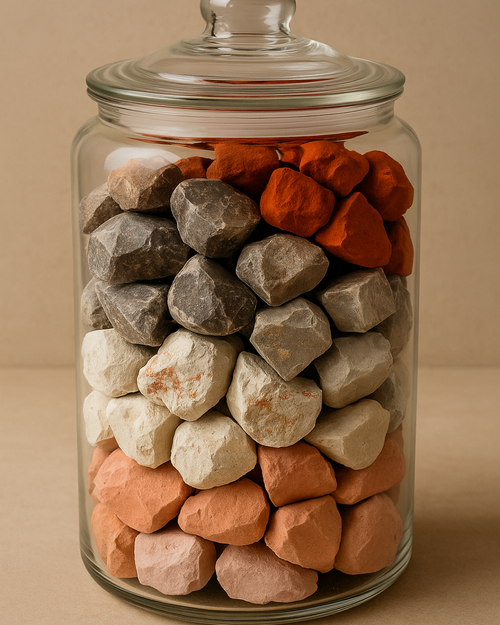
Terrones are chunks of hardened clay, often with a slightly earthy, wet-soil aroma. Chewing them gives a firm, satisfying snap that appeals to those who crave a more robust crunch. Depending on the region, terrones can range from pale grey to deep brown.
Barros
Known for their malleability, barros are softer, clayey lumps. They are often moistened slightly before consumption, releasing a richer, almost creamy mineral flavour. Perfect for those who enjoy a clay that is more pliable than the crisp terrones.
Pika
Pika is a term often used to describe small, bite-sized portions of edible clay specifically sold for snacking. They are prized for consistent texture and controlled crunch, making them ideal for ASMR-style eating videos.
Galettitas (Clay Cookies)
These are baked or pressed clay discs, sweet in their presentation but earthy in flavour. The galettitas have a crisp, clean break and often carry hints of petrichor or smokey undertones. They’re perfect for crunchy cravings with a little visual appeal.
Tierra Comestibles
Literally “edible earth,” these are finely powdered clays, usually mixed with other flavouring agents like cocoa or spices. They are easy to portion and consume, and their taste can vary from mineral-rich to slightly sweet depending on the source.
Terracotta Clay Pots
Not all clay consumption is in raw chunks—some regions use terracotta clay pots as edible vessels. These may be chewed or licked for their mineral content, and sometimes house sweet or spicy fillings. The pot itself contributes subtle earthy notes.
Dirts
Dirt clays are rustic, granular, and often darker in colour. They carry that full “soil after rain” taste, sometimes with smoky undertones. Dirts are an acquired taste but beloved for their authentic, primal crunch.
Ferreros
Not to be confused with the chocolate, ferreros are smooth, small clay spheres with a firm shell. They offer a precise, satisfying snap when bitten and are often flavoured subtly with local minerals.
Paletas
These are clay pops, shaped like miniature ice lollies. Paletas combine the fun of size and shape with the earthy, crunchy delight of edible clay. Some are infused with mild flavours to enhance the eating experience.
Cacahuates
Cacahuates are peanut-shaped clay pieces, either natural or lightly roasted. Their name reflects their shape more than taste, but they provide a uniform crunch and bite-sized portioning for easy snacking.
Polvos
Finely ground clay powders, polvos are often sprinkled over other snacks or dissolved in drinks. They deliver a subtle mineral taste and are ideal for those seeking gentle texture rather than a full crunch.
Cantaritos
Small clay cups designed for drinking or nibbling. These vessels themselves can be chewed, contributing a dry, chalky flavour that pairs perfectly with a sip of agua fresca or other beverages.
The Mexican Clay Eating Experience
Mexican edible clays are as much about culture as they are about texture and taste. From the crisp, popping galettitas to the soft, creamy barros, each type has a story, a purpose, and a sensory appeal. For pica enthusiasts, experimenting with these varieties is a way to explore the earthy, mineral-rich world of traditional clay eating.
0 comments